1-on-1 Online Music Lessons vs Group Classes: Which Is Better?
Learning music online has never been more accessible. Whether you're picking up the guitar, training your voice, or learning the ukulele, you now have two main paths: private music lessons or group classes. Both have their place. But they are not equal for every learner.
This guide breaks down the honest differences, so you know exactly what to expect before you commit.
What Actually Happens in Each Format
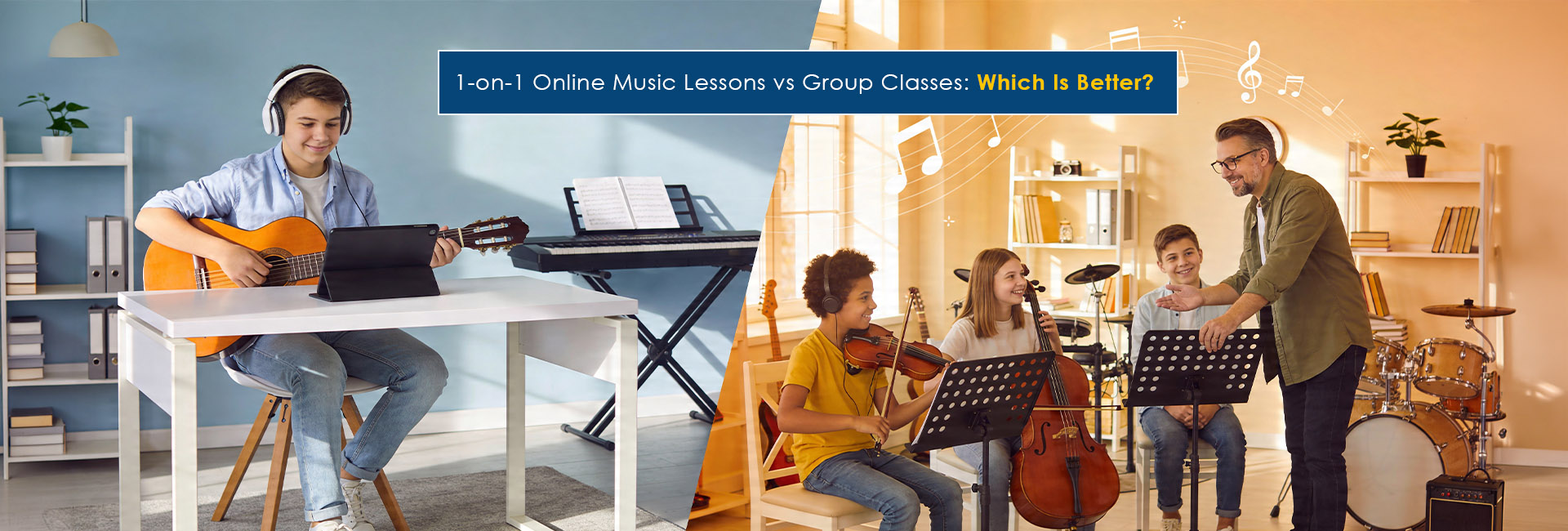
In a group class, one instructor teaches multiple students at the same time. The lesson follows a fixed pace and a shared curriculum. If you fall behind, the class moves on without you. If you're ahead, you wait.
In 1-on-1 online music classes, the entire session belongs to you. Your instructor watches how you hold your instrument, listens to your pitch, corrects your technique, and adjusts the lesson in real time based on where you are that day.
These are two fundamentally different learning experiences. Knowing which one fits your situation makes all the difference.
The Real Advantages of Private Music Lessons
1. Your Progress Sets the Pace
No two students learn at the same speed. Some people pick up chord transitions in a week. Others need three weeks on the same pattern before it clicks. With online private music lessons, neither scenario is a problem. Your teacher works at your pace, not someone else's.
2. Real-Time Feedback on Your Technique
Bad habits in music are easy to develop and hard to undo. In a group setting, your instructor divides attention across multiple students. Subtle issues like tension in your strumming hand or a slightly flat note get missed.
In a private lesson, your instructor focuses entirely on you. They hear every note. They see every movement. Corrections happen as you play, not days later when the habit is already forming.
3. A Schedule That Fits Your Life
Most group classes run on a fixed schedule. Miss a session, and you miss the content. Online private music lessons work differently. You book a time that fits your availability, whether mornings, evenings, weekdays, or weekends.
At LearnAtToms, this flexibility is built into how lessons work. Students start with a free demo lesson, then build a schedule around their actual lives.
4. Lessons Designed Around Your Goals
A teenager preparing for a school performance has different needs than an adult learning guitar as a hobby. Group classes serve an average student. Private lessons serve you specifically.
Want to focus on guitar? Your lessons center on that. Preparing for a specific song? Your instructor builds sessions around it. The curriculum follows your goals, not a preset syllabus.
Where Group Classes Have an Edge
Group classes are not without merit. They tend to cost less per session. They create a shared learning environment where students can observe each other. For some learners, the social aspect adds motivation.
If you're exploring music casually, have no specific performance goals, and prefer a lower-cost entry point, a group class is a reasonable starting place.
But for anyone serious about building real technique, tracking clear progress, or learning at their own pace, the tradeoffs of a group setting become significant very quickly.
Who Should Choose 1-on-1 Online Music Classes in the USA?
Private lessons are the stronger choice if:
- You're an adult learner with a busy schedule and limited practice time.
- You're a beginner who wants a structured path without the confusion of keeping up with a group.
- You have a specific goal, a performance, an exam, or a personal milestone you're working toward.
- You've tried group classes before and found the pace either too fast or too slow.
- You want consistent, measurable progress rather than general exposure.
Group classes work better if:
- You're exploring an instrument with no specific timeline in mind.
- Budget is the primary concern, and you're comfortable with slower, shared-pace progress.
How Online Private Music Lessons Compare to In-Person Ones
One question that comes up often: Does learning online actually work?
The short answer is yes, when the format is right. The critical factor is whether you're in a live session with a real instructor or watching pre-recorded videos.
Pre-recorded courses offer no feedback. You watch, you try, you guess whether you're doing it right. Live 1-on-1 online music classes that USA students take through platforms like LearnAtToms function exactly like an in-person private lesson. Your instructor sees and hears you in real time. They respond to what you're doing in that moment. The only difference is the screen between you.
For most students, especially adults with jobs and families, the ability to attend a live private lesson from home is a significant practical advantage over commuting to a studio.
What to Look for When Choosing the Best Online Music Classes in the USA
Not all platforms or instructors are equal. Before you commit, here are the things worth checking:
- Lesson format: Are these live 1-on-1 lessons or pre-recorded content? This distinction matters more than almost anything else.
- Trial option: A reputable service offers a demo lesson before you pay for a full package. This lets you assess the instructor's teaching style and whether the format works for you before spending money.
- Instructor consistency: Will you work with the same teacher every session? Consistency matters in music. Switching instructors disrupts progress and resets the relationship.
- Communication between lessons: Can you reach your instructor with a quick question between sessions? Access to your tutor for guidance and clarification between lessons is a meaningful part of a quality program.
- Progress tracking: Good programs track where you started, what you've worked on, and what comes next. Clear learning milestones so students can follow their own progress make lessons more motivating and structured.
Starting with a Demo Lesson
The smartest move before choosing any music program is to experience a lesson before committing. A free demo gives you direct access to the teaching style, the platform, and the overall structure.
At LearnAtToms, the entry point is a free demo lesson. You choose a schedule that fits your availability, attend a live 1-on-1 session, and decide from there whether the format fits your learning style.
There's no better way to evaluate the best online music classes in the USA than to sit through one and see how it feels.
Start Your Journey with a Free Demo Lesson
FAQ
1. Are 1-on-1 online music lessons better than group classes?
For most students, yes. Private lessons give you personalized feedback, flexible scheduling, and a curriculum built around your goals. Group classes follow a shared pace, which benefits some learners but limits progress for many others. If you're serious about building real technique, 1-on-1 lessons deliver results faster.
2. Are online private music lessons effective for beginners?
Yes. Beginners often benefit most from private lessons because they build correct technique from the start. Bad habits are harder to fix later. A dedicated instructor watching you perform and correcting your approach in real time sets a stronger foundation than group instruction or self-guided practice.
3. How do I choose the best online music classes in the USA?
Look for live 1-on-1 lessons rather than pre-recorded content. Confirm you'll work with a consistent instructor. Check whether a free demo lesson is available before you commit. Evaluate whether the platform tracks your progress over time.
4. Who should choose 1-on-1 online music classes in the USA?
Private lessons are the right fit for adult learners with specific goals, beginners who want a structured start, students preparing for performances or exams, and anyone who has tried group classes and found the pace wrong. If your schedule is unpredictable, the flexibility of booking lessons around your availability makes private online lessons especially practical.